



By the Softotech bankruptcy support team, drawing on 10+ years supporting US attorneys and almost 300 bankruptcy projects. Updated October 25, 2026.
Key takeaways
- Current monthly income is an average of income received, not what the debtor earns today.
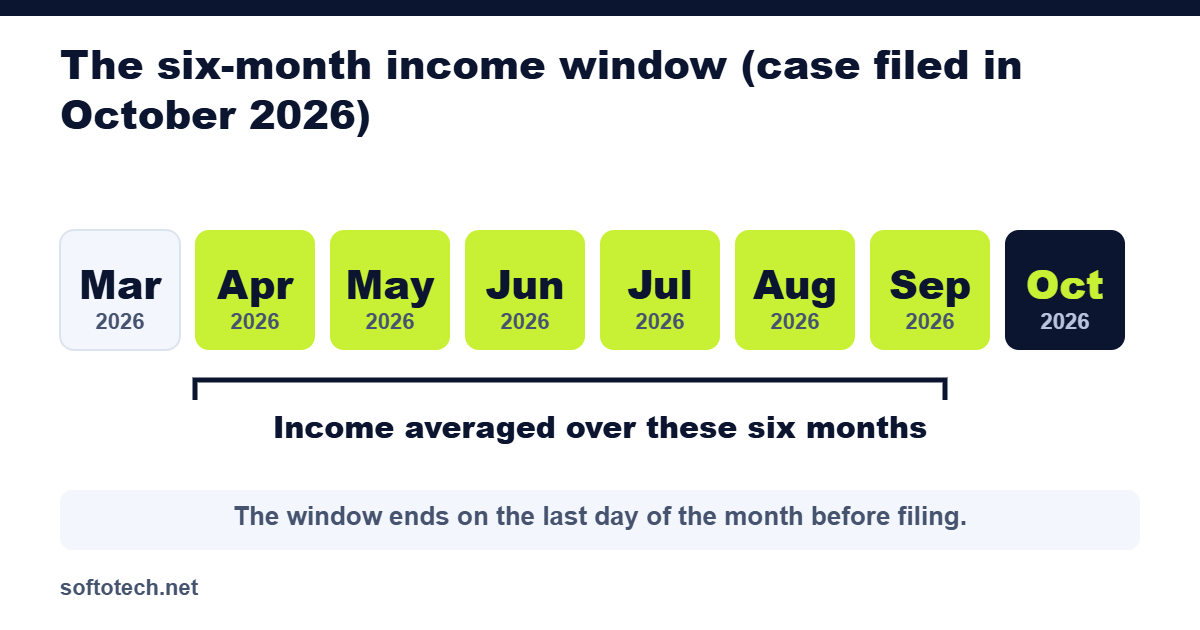
- The window is the six months ending on the last day of the month before the case is filed.
- Social Security benefits are excluded. Regular help with household expenses from others is included.
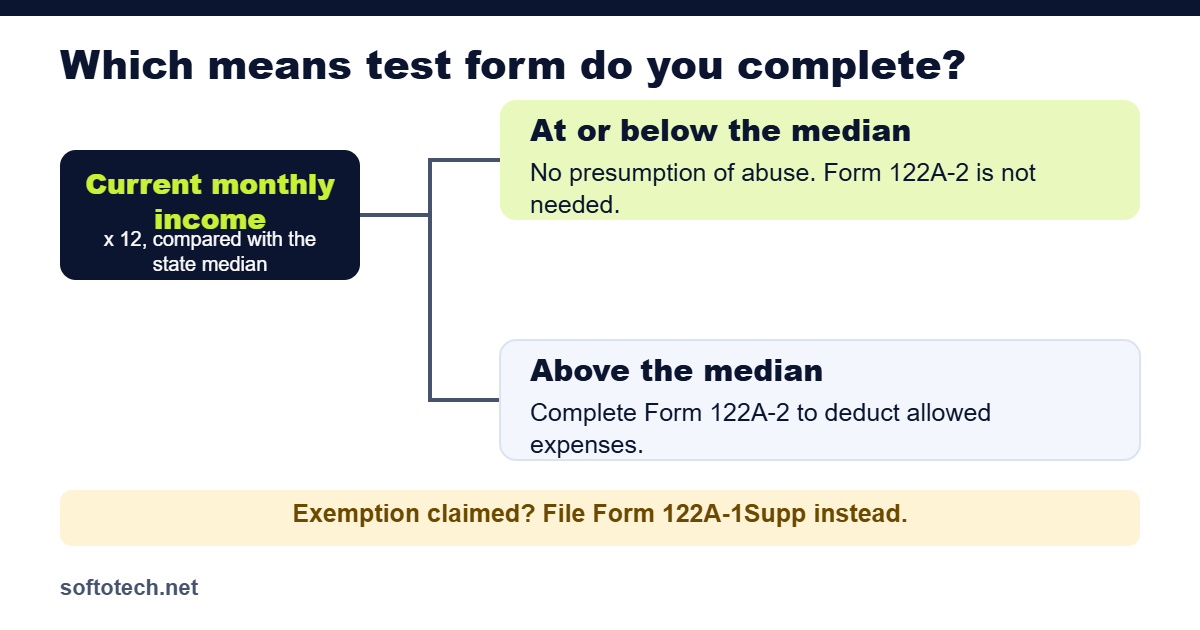
- At or below the median: no presumption of abuse and no Form 122A-2. Above it: complete Form 122A-2.
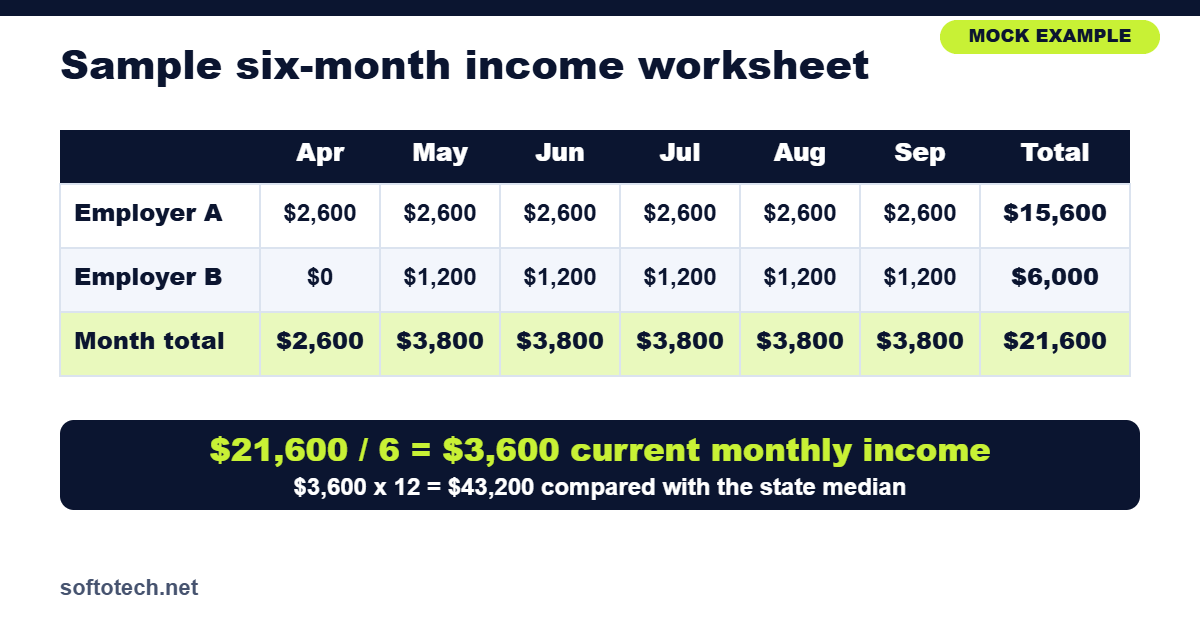
- Count the pay actually received in the window, then divide by six.
What is the Chapter 7 means test?
The means test applies to individual consumer debtors who want Chapter 7 relief. According to the US Trustee Program, if the disposable income calculated through the test is above certain thresholds, the US Trustee, creditors or other parties may ask the court to dismiss the case. A debtor can instead use Chapter 13, where debts are repaid under a court-approved plan that typically lasts 3 or 5 years depending on income.
In practice the test has two steps. First, Form 122A-1 reports current monthly income and compares it with the state median. Second, only if income is above the median, Form 122A-2 deducts allowed expenses to see what is left over.
What is current monthly income?
Under 11 U.S.C. 101(10A), current monthly income is the average monthly income from all sources that the debtor receives during the six months before filing, whether or not it is taxable. In a joint case, the spouses’ income is combined. Amounts that someone else pays regularly toward the household expenses of the debtor or dependents also count.
| Usually counts | Does not count |
|---|---|
| Wages, overtime, bonuses and commissions | Social Security Act benefits |
| Self-employment and business income, after ordinary business expenses | Payments to victims of certain war crimes or terrorism, based on victim status |
| Rental income, interest and dividends | Certain military disability and combat-related benefits |
| Pensions, unemployment and regular support received | Retired pay only to the extent the statute excludes it |
| Regular contributions from others to household expenses | — |
The statute is detailed. Read the current form instructions for how each type of income is treated.
Which six months apply?
In the usual case, the window is the six full calendar months that end on the last day of the month before the case is filed. Confirm the filing date first, because it moves the window.
| Case filed in | Six-month window |
|---|---|
| October 2026 | April through September 2026 |
| January 2027 | July through December 2026 |
| March 2027 | September 2026 through February 2027 |
What documents should you collect?
Collect proof for every month in the window, from every source. Pay stubs alone are often not enough.
| Income source | Documents to collect |
|---|---|
| Employment | Every pay stub in the window, from every employer |
| Bank deposits | Bank statements, to catch income that is not on a stub |
| Self-employment | Profit and loss statements, invoices, business bank statements |
| Rental income | Leases, rent ledgers and expense records |
| Benefits and support | Award letters, statements or court orders |
| Help from others | Written details of regular contributions to household expenses |
How do pay frequency and multiple employers change the math?
Do not convert one pay stub into a monthly number. Add the gross income actually received in the window, then divide by six. Weekly, bi-weekly, semi-monthly and monthly pay all produce different counts of pay dates inside the window.
How do you compare the result with the median?
Compare the annualized figure with the median family income for the debtor’s state and household size. The US Trustee Program publishes the data tables and notes which update applies to which filing date. For example, its page states that updated Census median income data applies to cases filed on or after April 1, 2026, so always pick the table that matches the filing date.
| Result | What happens next |
|---|---|
| At or below the median | No presumption of abuse. Form 122A-2 is not needed. |
| Above the median | Complete Form 122A-2 to deduct allowed expenses and certain debt payments. |
| Exemption applies (for example, debts are not primarily consumer debts) | File Form 122A-1Supp and complete only the verification part of Form 122A-1. |
What changes in Chapter 13?
Chapter 13 uses the same current monthly income idea on Form 122C-1, which also sets the applicable commitment period. Form 122C-2 then calculates disposable income. Because the income window works the same way, a clean income file helps both chapters.
What are the most common means test errors?
| Error | How to avoid it |
|---|---|
| Wrong filing month, so the window is wrong | Confirm the filing date before you start |
| A pay date missed or counted twice | List every pay date in the window and count them |
| Net pay used instead of gross | Use gross pay from the stub |
| Overtime, bonus or side income left out | Check bank deposits against the stubs |
| Wrong household size or median table | Match the table to state, size and filing date |
Related: the Form 107 checklist and how to outsource petition preparation.
We prepare the means test (Forms 122A-1 and 122A-2, or 122C-1 and 122C-2 for Chapter 13) with income averaging for every pay frequency.
See bankruptcy paralegal support for attorneysFrequently asked questions
What documents do I need for the Chapter 7 means test?
Every pay stub in the six-month window from every employer, bank statements, and records for any self-employment, rental, benefit or support income, plus household size and state.
What six months are used for current monthly income?
In the usual case, the six full calendar months ending on the last day of the month before the case is filed.
Is Social Security included in current monthly income?
No. Social Security Act benefits are excluded under 11 U.S.C. 101(10A).
When is Form 122A-2 required?
When current monthly income is above the median for the state and household size and no exemption applies. At or below the median there is no presumption of abuse, and Form 122A-2 is not needed.
How do I average bi-weekly or weekly pay?
Add all gross pay actually received in the six-month window and divide by six. Count the real pay dates in the window instead of multiplying one stub.
This article is general information for attorneys and legal staff. It is not legal advice. Forms, rules and thresholds change, so always check the current official forms and your local rules.
Related guides
- Outsource Bankruptcy Petition Preparation: A Checklist
- Bankruptcy Petition Preparer vs Paralegal: What to Know
- Statement of Financial Affairs Checklist (Form 107)