

Updated October 2026 · 7 minute read
Most “best lead generation tools” lists mix five different jobs into one ranking, and half the names are not lead generation tools at all. This guide sorts ten well known tools by the job they actually do, so you can build a stack that fits, instead of a pile that overlaps.
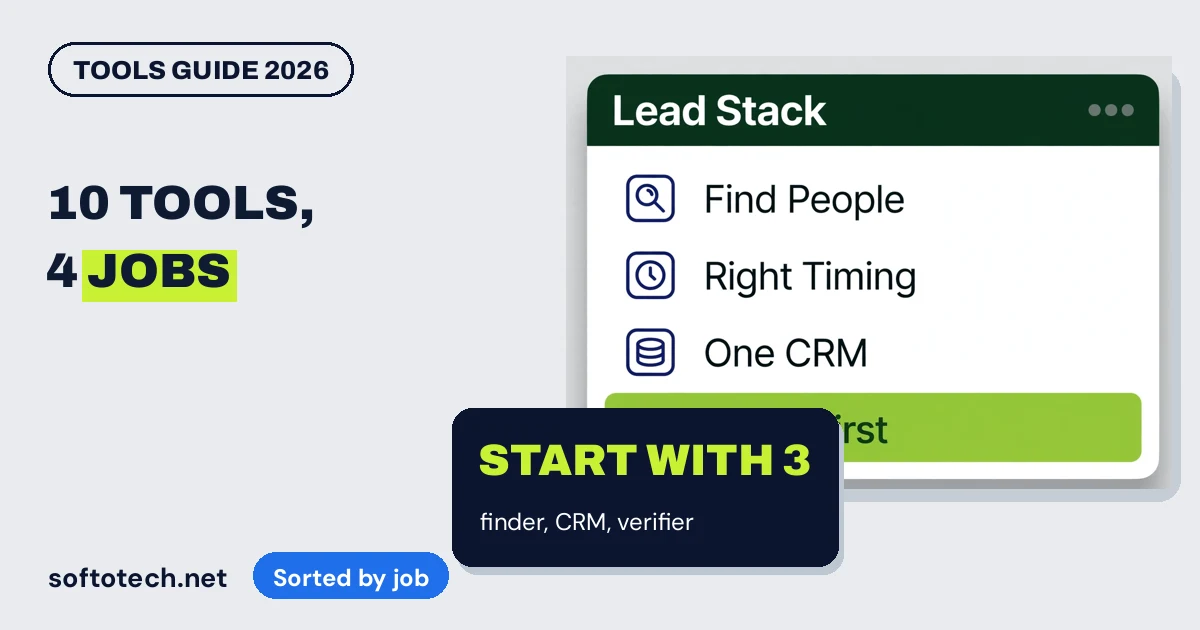
- A lead generation stack needs four jobs done: find the right people, know who is ready, keep the records in one CRM, and verify before you send.
- Apollo and ZoomInfo do the finding. 6sense does the timing. HubSpot does the keeping. The other famous names support campaigns; they do not generate leads by themselves.
- Start small: one data tool, one CRM, one verifier. Add intent and automation layers when volume justifies them.
- Prices and plans change constantly. Judge every tool on a test against your own market, not on listicles, including this one.
First, sort by job
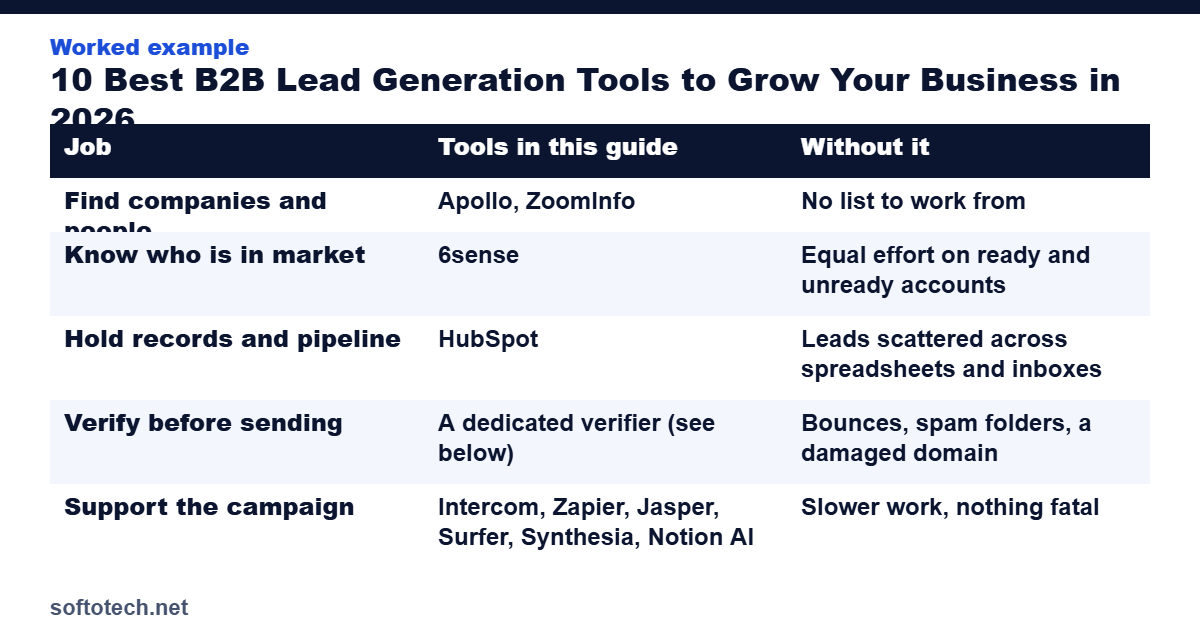
Ask of any tool: which job in the chain does it do? The chain has four links, and a stack breaks at the missing one, not at the weakest brand.
| Job | Tools in this guide | Without it |
|---|---|---|
| Find companies and people | Apollo, ZoomInfo | No list to work from |
| Know who is in market | 6sense | Equal effort on ready and unready accounts |
| Hold records and pipeline | HubSpot | Leads scattered across spreadsheets and inboxes |
| Verify before sending | A dedicated verifier (see below) | Bounces, spam folders, a damaged domain |
| Support the campaign | Intercom, Zapier, Jasper, Surfer, Synthesia, Notion AI | Slower work, nothing fatal |
The finders: Apollo and ZoomInfo
Apollo is the prospecting database most small and mid sized teams start with: company and contact search, enrichment, and basic outreach in one place. ZoomInfo plays the same position at the enterprise end, with deep company data and buying signals, priced accordingly. Both answer the same question, who should we talk to, and both are only as good as their coverage of your specific market. That coverage, not the feature list, is what your trial should measure: run the same target account list through each and compare how many decision makers come back with usable data. Our guides to finding decision makers and using finder extensions show the workflow these databases feed.
The timing layer: 6sense
6sense sells intent: signals that an account is researching your category before anyone fills in a form. Used well, it reorders your list so the ready accounts get attention first. It is built and priced for larger sales organisations, and it is an upgrade layer, not a starting point. A team without a finder and a CRM gains nothing from knowing who is ready, because it has nowhere to put the answer.
The home base: HubSpot
HubSpot is the CRM most growing teams land on, with marketing and sales tools attached and a free CRM tier that makes it the common starting point. Be clear about its job: it stores, scores and nurtures the leads the rest of the stack finds. It is the home base, not the scout. Teams that buy a CRM expecting it to produce leads are disappointed; teams that feed it good lists find it indispensable.
Capture and glue: Intercom and Zapier
Intercom works the inbound side: chat and AI assistance on your website that answers visitors, qualifies them and books meetings while your team sleeps. It generates conversations from traffic you already have, which makes it a genuine lead tool, just not an outbound one. Zapier is the glue: it moves records between the tools above so a new lead in one system appears in the others without a human copying it. Glue is unglamorous and, once a stack passes three tools, close to essential.
The supporting cast, honestly labelled
Four famous names appear on almost every lead generation list, and none of them finds a lead. Jasper writes marketing copy. Surfer helps content rank in search. Synthesia produces videos without a camera. Notion AI organises your team’s documents and notes. All four can make campaigns faster and better, and content led inbound is a real channel. But calling them lead generation tools is how stacks end up with ten subscriptions and no verified list. Buy them for the job they do, in the order your bottlenecks demand.
The tool most lists forget: verification
Between the finder and the send button sits the step that decides whether the campaign helps or harms: verification. A dedicated verifier checks every address before sending, and our guide to how verified leads boost revenue shows what rides on it: deliverability, replies, and the sender domain everything else depends on. No list of lead generation tools is complete without it, and most are.
A sensible starting stack
For a small team: Apollo or a comparable finder for the data, HubSpot’s CRM as the home base, and a verifier as the gatekeeper. Add Intercom when website traffic is worth capturing, Zapier when manual copying appears, and an intent platform like 6sense only when the list is bigger than the team’s hours. Each addition answers a named problem. That discipline, not the brands, is what makes a stack best in class.
Want the stack run for you?
Our lead generation service works this exact stack, plus manual research, to deliver verified, deduped lists matched to your market. You get the records and the sources, ready to send.
Questions
What is the best B2B lead generation tool?
There is no single best, because the jobs are different. The best finder is the one whose database covers your market, and the best CRM is the one your team will actually keep updated. Test two finders on the same target list and compare verified results.
How many tools does a small team need?
Three to start: a prospecting database, a CRM, and a verifier. Everything beyond that should answer a specific bottleneck you can name. Tool count is not a strategy.
Is HubSpot a lead generation tool?
It is a CRM with marketing tools attached. It stores, scores and nurtures leads; the leads themselves arrive from data tools, your website, or campaigns. Feed it well and it earns its place in every stack on this page.
Do AI features in these tools generate leads?
They speed up research, writing and scoring, but they do not replace the data, the verification, or the targeting decision. The workflow around the tools matters more than the AI label on them.
Related guides
Sources
- lemlist: finding emails on LinkedIn, tools compared, accessed October 2026
- The Rank Masters: best email finder Chrome extensions in 2026, accessed October 2026
Tahir Abbas
Founder of Softotech Solutions. Tahir’s lead generation team works with prospecting databases, CRMs and verification tools daily, building verified lists for agencies and B2B companies. The stack order in this guide is the one his team recommends to clients.